Short summary
Antibiotic resistance is one of the clearest everyday examples of evolution. It shows how inherited variation, selection, and rapid reproduction can change a population in ways that matter directly for human health.
What antibiotics do
Antibiotics are medicines that kill certain bacteria or stop them from growing. They are powerful tools, but they do not affect every bacterial cell in exactly the same way. A population of bacteria may contain inherited differences, including differences that make some cells harder to kill.
How resistance evolves
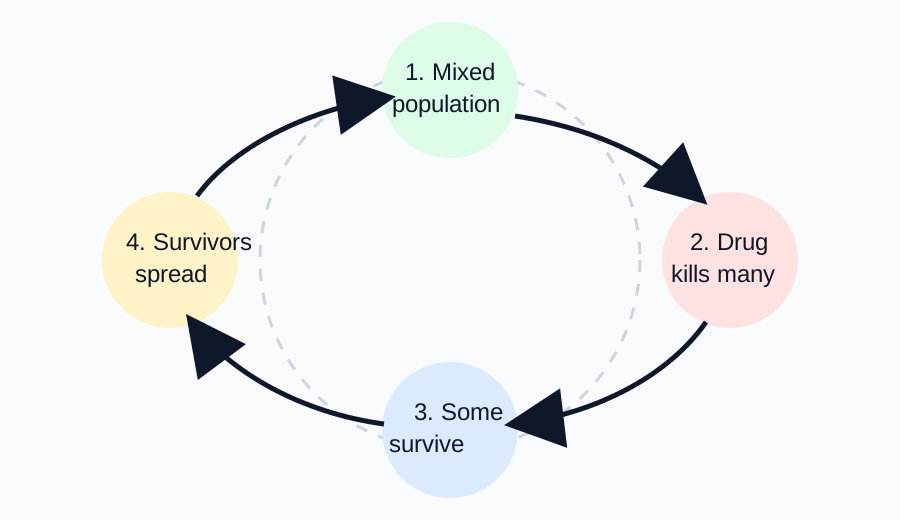
In a large bacterial population, some bacteria may already carry mutations or genes that help them survive a drug. When the antibiotic is used:
- many bacteria die
- resistant bacteria are more likely to survive
- survivors reproduce
- the next population contains more resistant bacteria
That is evolution by natural selection.
The bacteria do not “decide” to adapt
This point is important. The drug does not teach bacteria what to do, and bacteria do not intentionally invent resistance because they need it. Instead, the antibiotic creates a harsh environment in which resistant bacteria leave more descendants.
So resistance is selected, not planned.
Why this can happen quickly
Bacteria reproduce fast. When generations pass quickly, evolutionary change can also happen quickly. That is one reason antibiotic resistance can become a serious problem in a short time.
Why misuse makes the problem worse
Using antibiotics when they are not needed, or using them carelessly, can increase selection pressure for resistant bacteria. The more often bacteria face the drug, the more often resistant cells gain an advantage.
This does not mean every use is wrong. It means use should be careful and medically appropriate.
Why this matters beyond one patient
Resistant bacteria can spread. That turns a private medical issue into a public health issue. Harder-to-treat infections can lead to longer illness, more difficult hospital care, and fewer effective treatment options.
Why this page is such a good evolution example
Antibiotic resistance brings together several ideas at once:
- mutation creates new variation
- natural selection favors resistant bacteria in the presence of a drug
- observed evolution can be measured directly
That makes it one of the best examples for people learning evolution for the first time.
A useful final point
Resistance is not the body becoming “used to” antibiotics. It is the bacterial population changing. Keeping that distinction clear helps people understand both the biology and the public health message.